Mahjong Master: Daily Match
Mindful Daily PuzzlesPuzzle
4.93.33K Reviews
- Version
- 1.36.0
- Installs
- 10.00M
- Age Rating
- Everyone
Screenshots
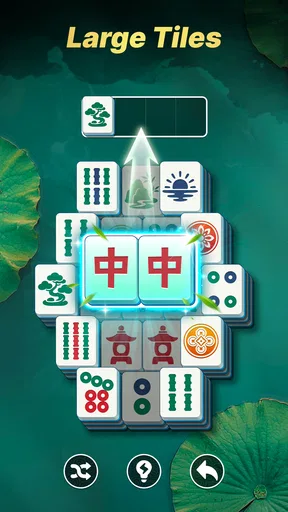
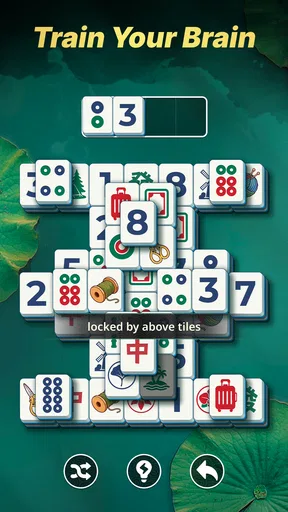
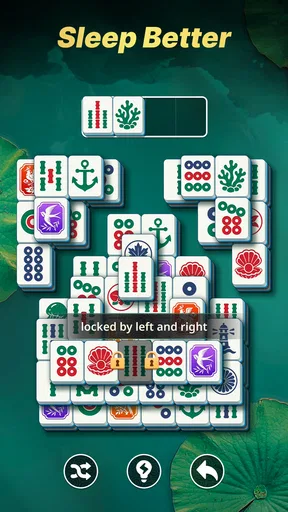
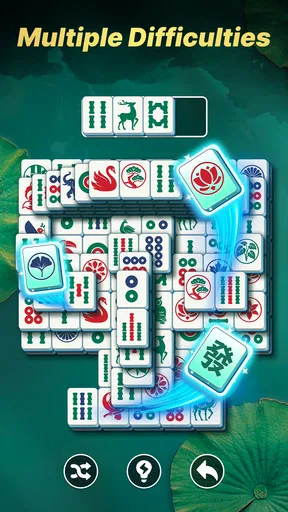
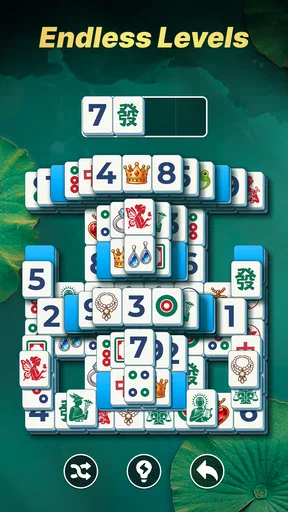
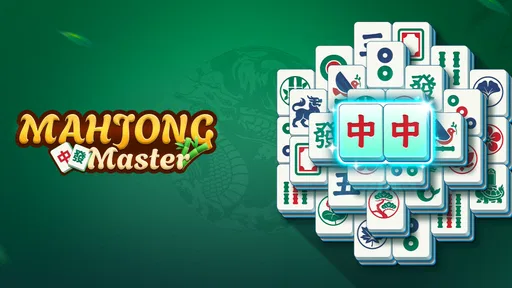
Our Review of Mahjong Master: Daily Match
 Analysis by Appyee
I approached Mahjong Master: Daily Match expecting a familiar tile-matching pastime, but its appeal is less about novelty than about how comfortably it settles into a quiet routine. This is a free puzzle game from Mindful Daily Puzzles, built around matching mahjong tiles while keeping the experience approachable for short sessions. After spending time with it, I see it as the kind of game you open when you want your attention occupied without being pushed into a frantic challenge.
The basic idea is easy to understand: find matching tiles and clear the board. That simplicity is important because it lets the presentation do more of the emotional work. Instead of making every moment feel like a test, the game leans toward a calm, deliberate pace. I can imagine playing it with a coffee in the morning, during a short break, or at night when a more demanding game would feel like too much effort.
Its broad reception supports that impression. The game holds a 4.9 average from around 263 thousand ratings, with roughly 1.7 thousand written reviews and more than 5 million installs. Those figures do not replace personal experience, but they do suggest that its relaxed form of tile matching has found a substantial audience.
A calm first impression built around familiar choices
The first thing I noticed is how little time the game needs before it becomes understandable. There is no complicated rule set to memorize and no elaborate fictional setup standing between the player and the puzzle. The focus stays on the board, the tiles, and the next useful match. For a casual game, that directness is a strength.
That does not mean the experience is empty. Mahjong-style matching has a small but meaningful tension: a pair may be visible, yet choosing it can change what becomes available later. I found myself shifting between quick recognition and cautious planning. Early moves can feel almost meditative, while a crowded arrangement asks for more attention. The game works best when I allow that change of pace instead of treating every board as something to rush through.
The presentation also makes a useful promise. It feels designed for players who want a puzzle they can understand immediately, not for people looking for a long campaign, complex character systems, or a competitive ladder. That distinction matters when deciding whether to install it. If your ideal mobile game is a strategic adventure with a large progression system, this will probably feel too focused. If you want a compact mental activity, the narrow scope is exactly why it works.
Mahjong Master: Daily Match is rated for Everyone, which matches the accessible nature of the play. The game is also free, lowering the barrier to trying it during an idle moment. I would still approach it with the right expectations: free and approachable does not automatically mean endlessly varied. Its value comes from the repeatable pleasure of solving boards, not from a constantly changing set of genres or systems.
What the opening minutes communicate
The opening experience communicates the game’s priorities through restraint. It does not need a dramatic hook because matching tiles is already familiar enough to invite immediate participation. That makes it especially suitable for someone who may be new to mobile puzzles or who does not want to read a long tutorial before playing.
I also appreciate that the central action remains visually legible. In a tile game, clarity is not a minor convenience. If symbols blend together or the board becomes difficult to scan, the challenge turns into frustration rather than thought. Here, the whole point is to notice relationships between tiles, so the visual language has to support recognition before it can create atmosphere.
One practical tip is to treat the first few boards as a way of learning the game’s visual hierarchy rather than trying to maximize speed. Notice which tiles are easy to distinguish at a glance and which require a closer look. That habit pays off later, because scanning the board efficiently is more useful than tapping randomly and hoping the next pair appears.
Art direction and setting: a playable language of quiet focus
The game’s setting is not presented as a large world with characters and lore. Instead, the board itself becomes the setting. That is a sensible choice for this kind of puzzle because every visual element has to serve two jobs: make the game pleasant to look at and help the player read the available moves.
What I find effective is the relationship between the familiar mahjong imagery and the uncluttered mood. The tiles carry the identity of the game, while the surrounding presentation gives the board room to breathe. This creates a soft visual rhythm: inspect, identify, match, and return to scanning. The scene does not compete with the puzzle, which is exactly what I want from a relaxing tile game.
There is a useful trade-off here. Stronger decoration might make the game feel more distinctive, but it could also make matching slower or less comfortable. The restrained direction favors usability over spectacle. Players who want elaborate fantasy backgrounds or a highly dramatic visual style may find it modest. I see that modesty as deliberate rather than unfinished, because the board remains the main object of attention.
The art direction also influences how long a session feels. A busy interface can make a few minutes seem tiring, while a clear board encourages one more puzzle. That does not mean the game eliminates fatigue. Repeated matching still asks the eyes to compare shapes and symbols, especially when I play for longer than intended. The calm look helps, but it is not a substitute for taking breaks.
Why visual clarity matters more than decoration here
For this particular game, the most important visual feature is not a striking backdrop; it is the speed at which I can distinguish a useful pair from a similar-looking distraction. That is where the design earns its keep. A puzzle can be relaxing only when the player feels challenged by decisions, not by poor visibility.
I recommend playing with the screen positioned at a comfortable distance and avoiding very dim surroundings. That is not a special trick or a hidden mode, just a practical way to reduce eye strain during tile-heavy play. I also find that pausing after a difficult board helps preserve the soothing mood. Continuing while tired can turn a gentle puzzle into a repetitive chore.
The setting works particularly well for transitional moments. On public transport, in a waiting room, or between household tasks, I can enter the puzzle without first remembering a complicated story or objective. The board provides its own immediate context. When I leave, I do not feel as though I have abandoned a narrative thread, which makes the game easy to fit around real life.
Sound and rhythm: the pace comes from the player
The game’s mood depends heavily on rhythm, and that rhythm is created less by spectacle than by the repeated cycle of looking and matching. Each move gives a small moment of confirmation before attention returns to the remaining tiles. That structure makes the experience feel measured, even when I am actively planning several moves ahead.
I would describe the sound design as part of the game’s supportive layer rather than its main attraction. In a puzzle built on visual comparison, audio should reinforce the sense of progress without demanding attention. The overall mood benefits when sound stays secondary to the board. Players who prefer a fully silent experience can also treat the game as a quiet visual exercise, while those who enjoy feedback can let the game’s response to each action add a little momentum.
This is where the pacing becomes more interesting than the simple rules suggest. A fast player can turn a board into a brisk matching exercise, while a cautious player can slow down and examine the available choices. The game does not need a dramatic timer to create pressure; the possibility of making an unhelpful move is enough to produce a mild strategic pause.
My best everyday use case is a short reset after concentrated work. I might play a board when I need to step away from a document or screen-heavy task, because the activity changes the kind of attention I am using without requiring a large commitment. The important part is setting a boundary. A game that feels restful for one board can become another source of screen fatigue if I keep going automatically.
How to use the rhythm instead of fighting it
My most useful approach is to separate observation from action. I first scan the board for obvious pairs, then look at what those removals may expose, and only then start tapping. This is more satisfying than immediately taking the first available match because it turns the board into a small planning problem. It also reduces the feeling that I am simply reacting to whatever catches my eye.
A second tip is to slow down when the board looks nearly solved. The final tiles can be deceptively awkward because the obvious pair is not always the most helpful one. Taking an extra moment to inspect the remaining layout preserves the game’s calm rhythm and can prevent a promising run from becoming a sequence of hurried guesses.
There is also a psychological benefit to accepting imperfect sessions. Not every board needs to become a personal best or a flawless demonstration of concentration. If I use the game as a brief reset, the value is in the focused pause itself. That makes it a better fit for casual players than for anyone who needs a deep, measurable training program.
Mechanics that fit the mood, with limits worth knowing
The tile-matching mechanic and the quiet presentation support each other naturally. The rules are simple enough for immediate play, but the board still rewards visual memory, patience, and awareness of consequences. That balance is the game’s central success. It offers more involvement than a purely automatic time-killer without demanding the commitment of a large strategy title.
The offline puzzle format is especially useful. I can imagine keeping it available for moments when connectivity is unreliable or when I want to avoid opening a more distracting social app. Offline play also suits the game’s self-contained structure: the board is the activity, rather than a doorway into a constantly updating online space.
That strength comes with a trade-off. A game centered on a single matching idea may eventually feel repetitive to players who need frequent mechanical surprises. Even when layouts change, the fundamental action remains the same. I would choose this over a busier puzzle collection when I want consistency, but I would choose a broader puzzle app when I am looking for word games, physics challenges, number problems, and tile matching in one place.
The game is also not the right choice for someone who wants a highly competitive experience. There is no reason in the core concept to expect the social pressure, narrative stakes, or elaborate strategic layers found in other puzzle categories. Its satisfaction comes from completing a board and maintaining focus, not from proving superiority over another player.
One non-obvious advantage is how well the simple mechanic accommodates different energy levels. When I am alert, I can think ahead and look for efficient sequences. When I am tired, I can play more slowly and let the act of sorting visual information occupy my mind. Few casual games handle both states comfortably; many are either too passive or too demanding. This one sits in the middle.
Who will enjoy it, and who should skip it
I would recommend it to players who like traditional mahjong-style matching, people seeking a low-pressure brain game, and anyone who wants an offline-friendly activity that can be picked up without preparation. It is also a reasonable choice for households where an Everyone-rated game needs to be easy to understand across different ages.
I would be more cautious about recommending it to players who dislike repetition, need a strong story to stay engaged, or expect a large number of distinct puzzle mechanics. It may also disappoint anyone searching for a rigorous cognitive-training tool with detailed performance analysis. The game encourages attention, but I would not confuse enjoyable matching with a formal assessment of mental ability.
Another practical consideration is screen size. On a larger phone or tablet, the board should feel easier to inspect, while a smaller display may make similar tiles more demanding to compare. That does not make the game unsuitable for compact phones, but it can change the balance between relaxing play and careful visual work. If you often experience eye strain with dense puzzle boards, shorter sessions are the sensible approach.
The current version is 1.27.1, and the game was released on January 22, 2026. Those details make it easier to identify the edition being discussed when you install it, especially if you see references to similarly named mahjong games. The developer is Mindful Daily Puzzles, a name that fits the game’s focused, routine-friendly identity without changing what the app actually offers.
Atmosphere verdict: a dependable pause rather than a grand adventure
After using Mahjong Master: Daily Match, I see its strongest quality as coherence. The art direction, tile-focused setting, sound layer, and adjustable pace all point toward the same destination: a calm matching session that asks for attention without making a performance out of it. The mechanics remain visible at all times, which keeps the atmosphere from becoming empty decoration.
Its limitations are equally clear. The central activity can become repetitive, and players who want story, competition, or constant novelty should look elsewhere. The relaxed mood also depends on how it is used. A few deliberate boards can feel restorative; an extended stretch of repetitive scanning may not. That is why I think of it as a pocket-sized pause rather than a game designed to occupy an entire evening.
The best way to play is to treat each board as a short focus exercise, not a race. Scan before tapping, notice how early matches affect later choices, and stop when the experience stops feeling refreshing. Those habits bring out the game’s thoughtful side and make the simple rules feel more rewarding.
For a free puzzle game rated for Everyone, it offers a clear and pleasant proposition: familiar mahjong-style matching, an offline-friendly format, and a visual mood that supports quiet concentration. I would recommend it to a friend who wants something gentle but still mentally engaging, especially for small gaps in the day. I would not recommend it as a replacement for a varied puzzle collection or a deep strategy game. Within its narrower goal, though, it succeeds by knowing exactly what kind of moment it wants to create.
Privacy and Permissions
See what permissions an app requests and how it handles your data.
- Wi-Fi connection information
- view Wi-Fi connections
- Other
- view network connections, full network access, run at startup, draw over other apps, control vibration, prevent device from sleeping
Verdict
Strengths of Mahjong Master: Daily Match
- Daily challenges provide a steady reason to return.
- Simple controls make tile matching comfortable on mobile screens.
- Short rounds fit well into quick breaks or commutes.
- Multiple layouts help keep the classic format from feeling repetitive.
- Relaxing gameplay works well for casual, low-pressure sessions.
Limitations of Mahjong Master: Daily Match
- Some puzzles may feel too similar after extended play.
- Tile designs can become difficult to distinguish on smaller screens.
- Progress may depend on completing tasks consistently each day.
- Players seeking competitive multiplayer may find the experience limited.
- Ads may interrupt the flow between rounds or rewards.
Other Releases by Mindful Daily Puzzles
View All
Similar Picks in This Category
View All
Block Blast!
HungryStudio4.8

Braindom: Brain Games Test
Lahana Game Studio4.6

AMAZE!
CrazyLabs LTD4.6

Sudoku - Classic Sudoku Puzzle
Oakever Games4.7

Art Puzzle - Puzzle Games
Easybrain4.8

Amaze GO!
Oakever Games4.9
Frequently Asked Questions
What is Mahjong Master: Daily Match?
Mahjong Master: Daily Match is a casual tile-matching puzzle game built around the traditional Mahjong solitaire format. You clear the board by pairing identical, unobstructed tiles before the layout runs out of possible moves. The daily-match structure adds a new challenge to return to regularly, while the short levels make it suitable for quick sessions during breaks or whenever you want a relaxing brain-training activity.
How do you play Mahjong Master: Daily Match?
Gameplay is straightforward, but planning becomes increasingly important. Tap two matching tiles that are free on at least one side and not covered by another tile to remove them from the board. Continue matching pairs until every tile has been cleared. If no obvious pair is available, use the available hints or shuffle options carefully, since relying on them too often may limit your ability to finish more difficult layouts.
Does Mahjong Master: Daily Match work offline?
Many Mahjong solitaire levels can generally be played without a constant internet connection, which makes the game convenient for travel or areas with unreliable service. However, online access may still be needed for advertisements, daily challenges, synchronization, updates, or certain reward features. Availability can vary by version and device, so it is best to launch the game once while connected before relying on offline play.
Is Mahjong Master: Daily Match free to download and play?
Mahjong Master: Daily Match is typically available as a free download, allowing players to begin matching tiles without an upfront purchase. Like many free mobile puzzle games, it may support itself through advertisements and could offer optional in-app purchases for removing ads, obtaining hints, or accessing other convenience features. Review the store listing and purchase settings before downloading if you prefer a completely uninterrupted experience.
Is Mahjong Master: Daily Match suitable for children and beginners?
The basic rules are easy to understand, so beginners and casual players can usually start playing immediately. There is no complicated control scheme, and the calm matching format can appeal to a wide range of ages. Parents should still check the current age rating, advertising content, privacy information, and any in-app purchase options, especially if the game will be installed on a child’s Android or iOS device.
Play our best games!


